What Is Architectural Casework? A Plain-English Guide
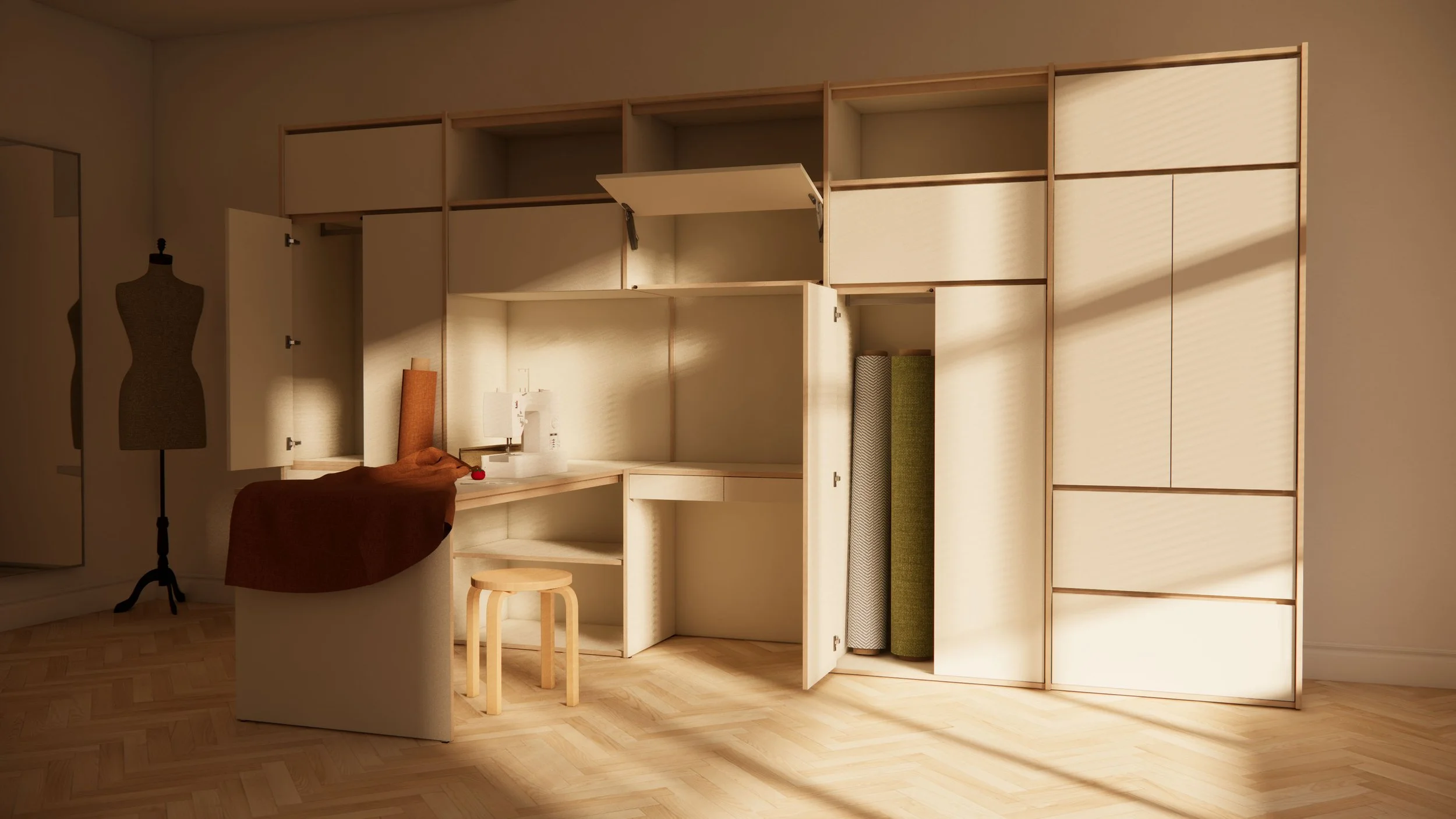
The term gets used often in design circles. Here is what it actually means - and why it matters for your home.
If you have spent any time looking into custom furniture, built-ins, or high-end interior design, you have likely come across the term architectural casework. It sounds impressive. It also sounds vague. What does it actually mean - and more importantly, does it matter when you are trying to figure out what to do with your living room wall?
The short answer is yes, it matters quite a lot. Understanding the difference between standard cabinetry and architectural casework is the difference between furnishing a space and truly designing one.
Casework, Defined
At its most basic, casework refers to any furniture or fixture built around a case - a box-like enclosure that forms the structural unit. Cabinets, wardrobes, shelving units, desks, and wall systems are all forms of casework. The term itself comes from the building trades, where casework describes the millwork components installed into a structure: the cabinets, built-ins, and enclosures that give a space its functional and visual character.
The word architectural is where it gets more interesting. Architectural casework is casework that has been designed with the same rigour, precision, and spatial intelligence that an architect brings to a building. It is not just furniture that happens to fit against a wall. It is furniture conceived as part of the architecture of the room - considered in relation to ceiling height, floor plane, proportion, material, and light.
“Architectural casework is not just furniture that happens to fit against a wall. It is furniture conceived as part of the architecture of the room.”
In practice this means tighter tolerances, more considered proportions, and a closer relationship between the furniture and the space it inhabits. It means millimetre-precise fitting rather than approximate sizing. It means materials and finishes chosen for how they will age, not just how they photograph. And it means a system of components that relate to one another with the coherence of a designed whole, not a collection of individual pieces that happen to share a room.
How It Differs from Standard Cabinetry
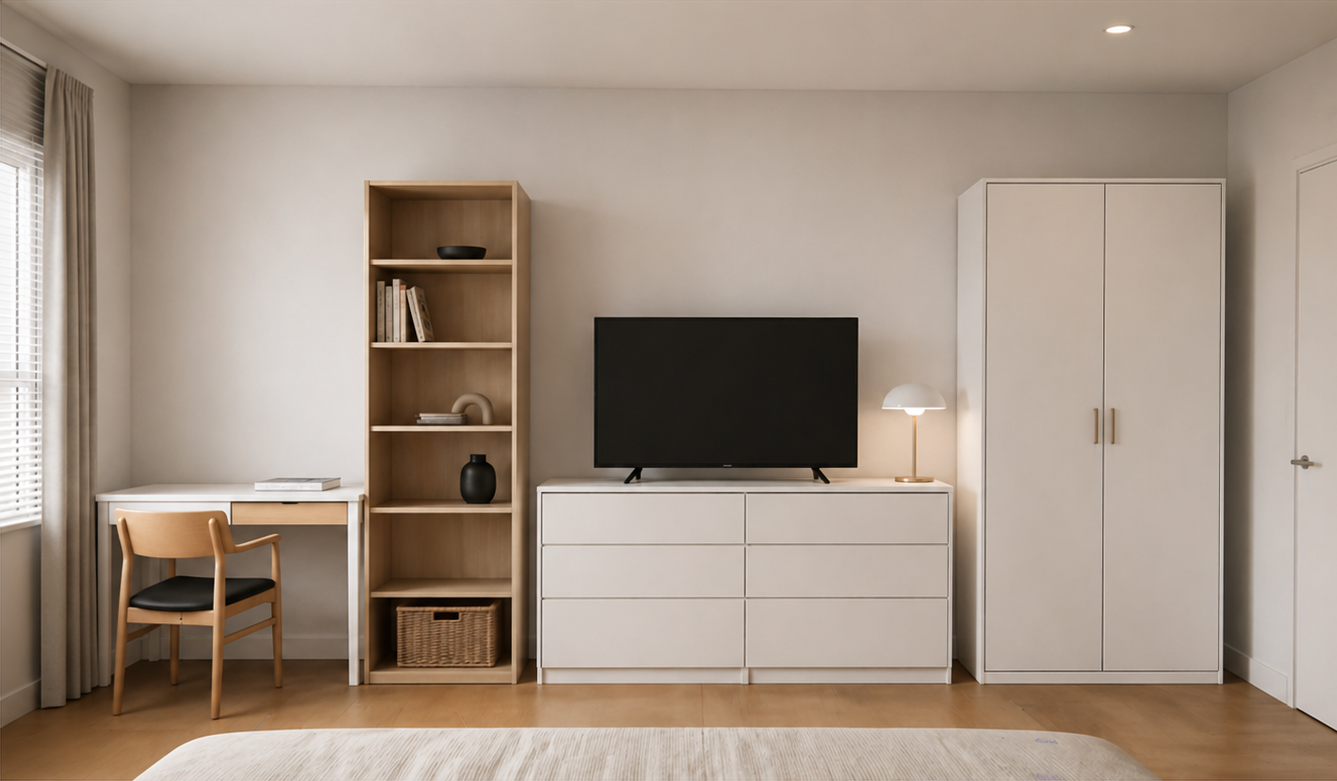
Off-the-shelf furniture pieces come in standard dimensions, resulting inefficient uses of space and hard to clean gaps
Standard cabinetry - the kind available from large retailers or most kitchen and bath showrooms is designed to be manufactured at scale and installed quickly. It works within fixed module sizes, offers a limited range of configurations, and is typically designed to be replaced rather than refined. There is nothing wrong with this approach for the right application. But it has clear limitations when the goal is a space that feels genuinely considered.
The gap between standard cabinetry and architectural casework shows up most clearly in three areas:
Proportion. Architectural casework is sized to the specific dimensions of your space, not the nearest standard module. A wall that is 3,847mm wide does not need to be accommodated by a collection of standard-width cabinets and a filler panel. It can be resolved as a single, coherent composition.
Integration. Architectural casework is designed to work across functions and across rooms. A wardrobe, a home office, and a media wall conceived within the same system share a material language, a dimensional logic, and a visual coherence that standard cabinetry - specified piece by piece from different ranges - rarely achieves.
Longevity. Architectural casework is built to last. Premium materials, precision fabrication, and considered construction details mean that a well-made piece of casework should outlast the trend that prompted it by decades.
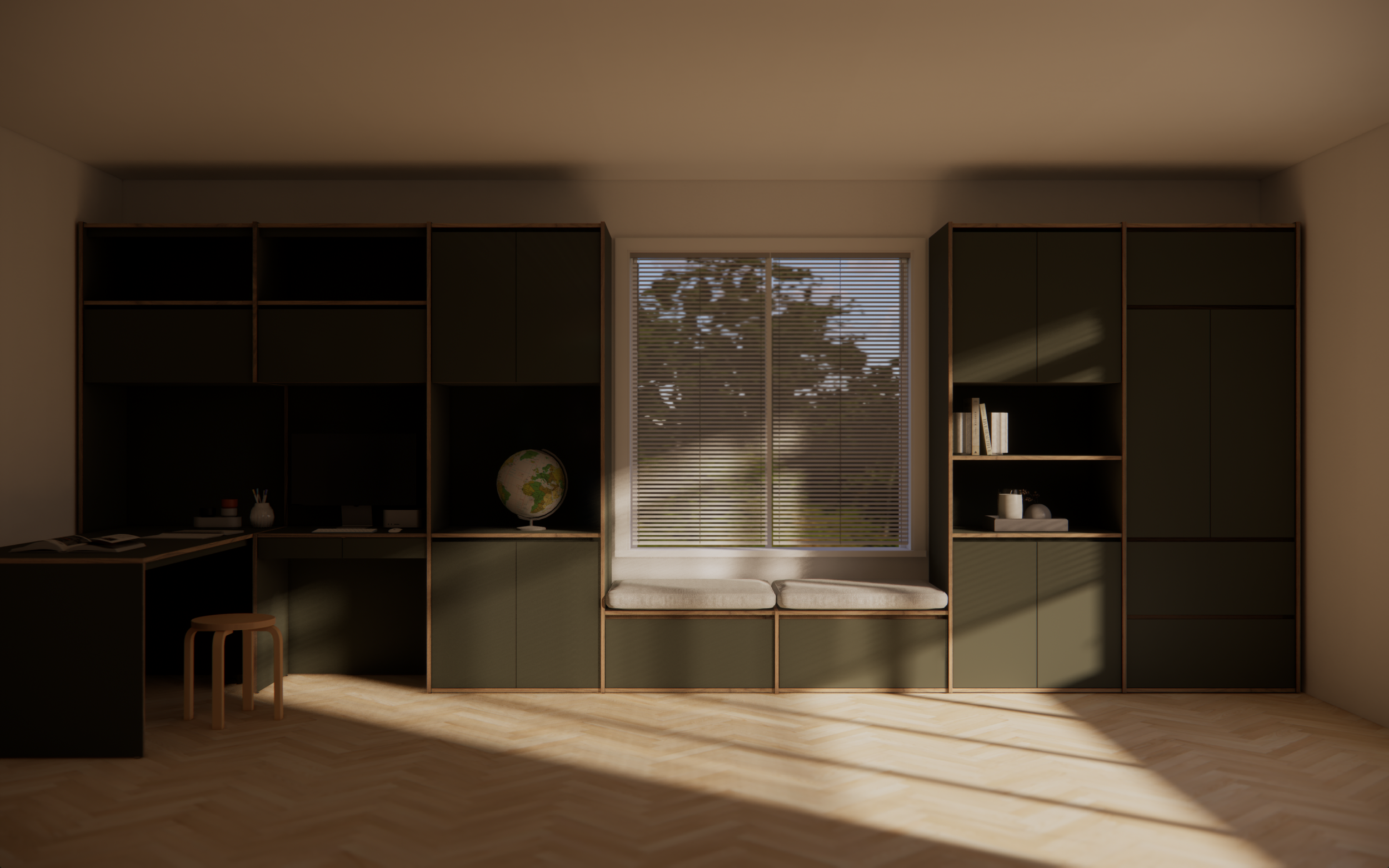
A multi-functional Tekka fully outfitted across the wall, offering work space, storage, and a reading nook.
Custom vs. Modular Architectural Casework
Traditionally, achieving architectural casework meant commissioning a fully custom millwork package - a process that involves significant design time, complex fabrication, and a cost and timeline that puts it out of reach for many projects.
The alternative has historically been to compromise: to accept standard cabinetry and hope that careful styling will close the gap. It rarely does.
A third option has emerged that sits between these two: modular architectural casework. The idea is straightforward - design a system of precision-engineered components that share a dimensional logic and a material language, and allow them to be composed freely into fully personalized configurations. The result carries the coherence and finish quality of custom millwork, delivered with the efficiency and accessibility of a designed system.
Why It Matters for Your Home
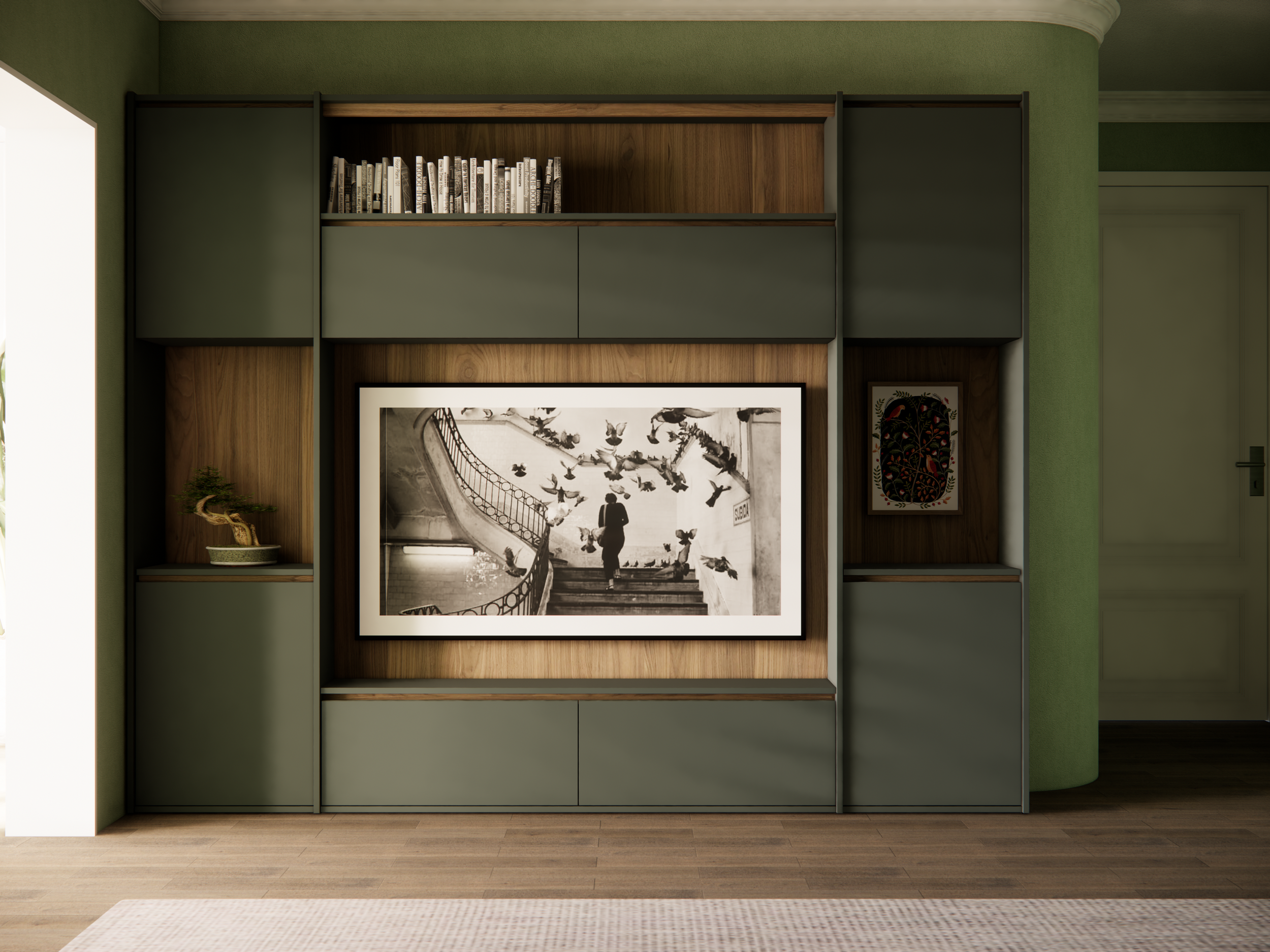
Tekka TV wall with Frosted Walnut and Pewter to harmonize with existing wall and floor finishes
The spaces we inhabit shape how we feel and how we function in ways that are easy to underestimate. A room that is well-resolved, where the furniture fits the architecture, where storage is genuinely sufficient, where every surface and material has been considered, feels qualitatively different from one that has been furnished. It is calmer, more generous, more personal.
Architectural casework is one of the most effective ways to achieve that quality of resolution. It addresses the walls, - the largest surfaces in any room, with the same seriousness that good design brings to every other element. It solves problems beautifully: the home office that doubles as a guest room, the living wall that conceals storage without sacrificing character, the bedroom that functions with quiet precision.
It is, in short, furniture that understands the room it is in.
At Tekka, this is what we set out to build - a modular casework system developed over years of custom millwork experience, designed to bring architectural thinking to more spaces and more people. Not as a compromise. As the better option.
READY TO BEGIN?
See What Architectural Casework
Looks Like in Your Space
Visit our Vancouver showroom or book a complimentary design consultation online.