A meditation on square footage, the cost of more, and the quiet possibility that the room you have is enough.
It is the question almost everyone asks eventually. Standing in a room that feels too full, looking at possessions that have outgrown their shelves, watching a household shift and stretch around the space it occupies, the thought arrives almost on its own: we need more space.
It is a reasonable thought. It is also, more often than not, the wrong one.
The instinct to acquire more space is one of the most expensive instincts a person can act on - particularly in a city like Vancouver, where space is among the most costly in the world. And it is frequently a response not to an actual shortage of room, but to a shortage of resolution. The room is not too small. The room is unconsidered. There is a difference, and the difference is worth tens of thousands of dollars.
The true cost of more
Consider what acquiring more space actually involves.
Moving to a larger home means a larger mortgage, a larger down payment, higher property taxes, higher heating and maintenance costs, and the substantial transactional friction of selling one home and buying another - realtor fees, legal costs, the land transfer tax, the moving itself. In Vancouver, the jump from a one-bedroom to a two-bedroom, or from a smaller house to a larger one, is frequently a quarter-million-dollar decision or more once everything is counted.
Renovating to add space, building out, building up, reconfiguring walls - is less expensive than moving but rarely cheap. A meaningful addition runs well into six figures, takes months, requires permits, and turns a home into a construction site for a season or more.
These are the standard responses to the feeling of not enough room. And sometimes they are genuinely necessary. A growing family in a true one-bedroom. A household that has fundamentally outgrown its walls. There are real situations where more space is the only answer.
But these situations are rarer than the feeling that produces them. Far more often, the feeling of needing more space is a feeling of needing the existing space to work better. And those are very different problems, with very different price tags.
What a room is actually doing
Walk through most homes, and you will find a striking amount of space doing very little.
A guest room sits empty for three hundred and fifty nights a year, holding a bed that is used a dozen times, while the household has nowhere to work, nowhere to exercise, nowhere to retreat. A dining room is used for two dinners a month and stores the rest of its life as a surface for things that have nowhere else to go. A bedroom devotes forty square feet to a bed that is occupied only while its owner is unconscious. A living room loses a third of its floor area to furniture that doesn't quite fit and storage that doesn't quite work.
This is not a failure of the people living there. It is a failure of the rooms to be designed for the lives actually being lived in them. Most homes are furnished rather than designed - filled with freestanding pieces that sit against walls, leave gaps, and accumulate rather than resolve. The space exists. It is simply not being asked to do enough.
The question, then, is rarely do I have enough square footage. It is almost always is my square footage working as hard as I am paying for it to.
The difference between filling a room and resolving one
There is a particular feeling that a well-resolved room produces. It is hard to name until you've stood in one. The walls feel finished. Everything has a place. The room holds what needs holding without feeling full, and offers more usable openness than its dimensions would suggest. Nothing is fighting the architecture; the architecture is doing the work.
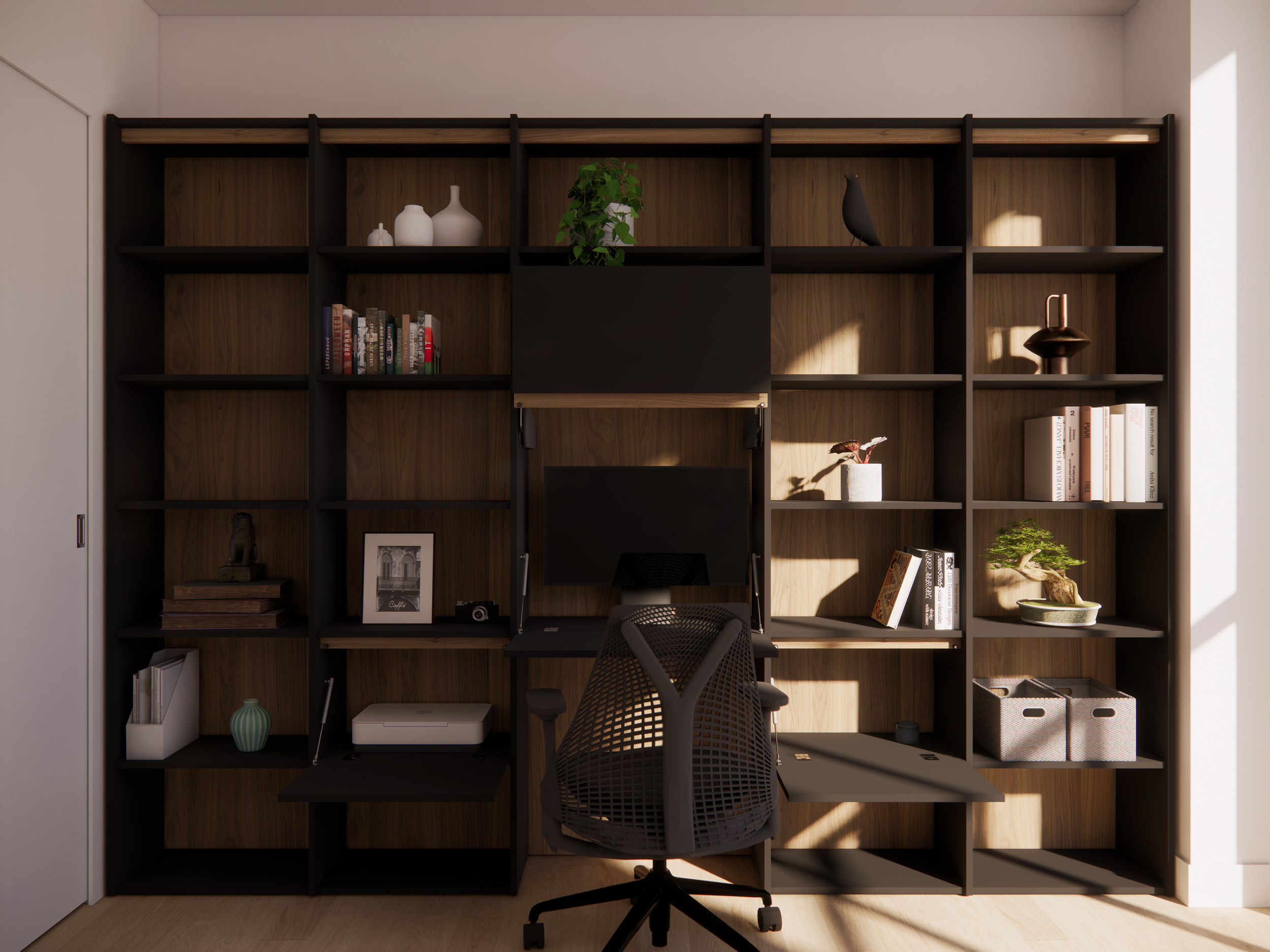
This feeling has almost nothing to do with size. A small room, properly resolved, feels more spacious than a large room cluttered with furniture that doesn't fit. The eye reads resolution as space. A wall of considered, built-in storage - one that runs floor to ceiling, holds what the household actually owns, and presents a single clean plane to the room - gives back more felt space than a larger room scattered with bookcases and dressers and consoles that don't speak to one another.
This is the quiet inefficiency hiding in most homes. The square footage is there. It is being consumed by furniture that occupies floor without resolving it, by storage that fails to contain, by rooms locked into a single function they only fulfill part of the time.
Asking a room to be more than one thing
The most underused resource in most homes is not floor area. It is time.
A guest room is a bedroom for twelve nights and nothing for the rest of the year. A home office is a workspace for eight hours and dead space for sixteen. A dining room performs for a few hours a week. Each of these rooms is dedicated to a single function it fulfills only occasionally, and idle the rest of the time.
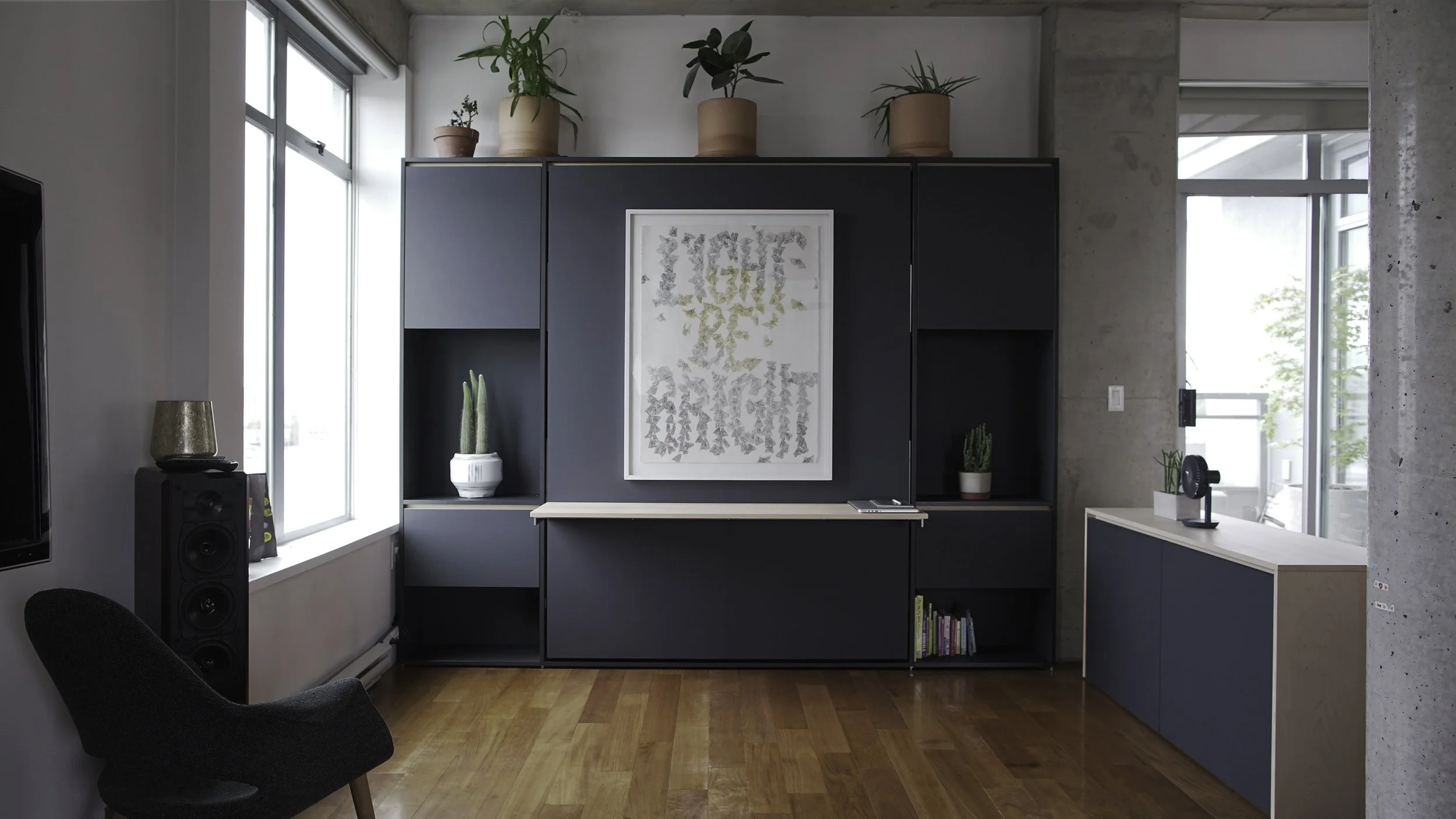
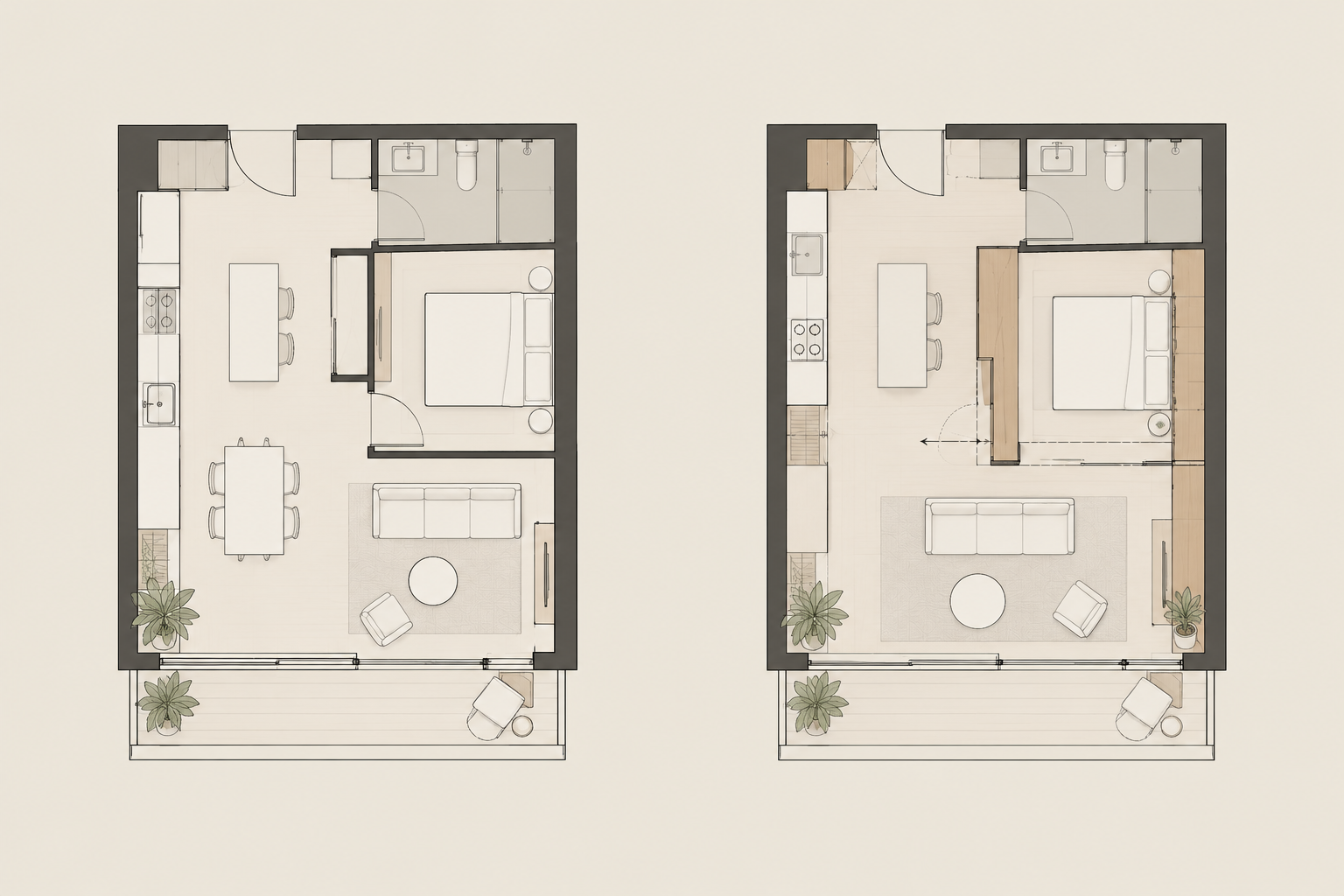
The alternative is to design rooms that change. A space that is a home office by day and a guest room by night - a wall bed disappearing into a considered wall, a desk emerging when needed, the room shifting cleanly between two complete functions with no compromise to either. A living area that absorbs genuine storage into its architecture rather than surrendering floor space to it. A single room, through careful design, doing the work of two.
This is where the real recovery of space happens. Not by adding square footage, but by allowing the square footage you already own to serve more than one purpose across the hours of a day. The room you think is too small is very often a room being asked to do only one thing when it could comfortably do two.
When more space is the answer - and when it isn't
None of this is an argument that no one ever needs more room. Some households genuinely do. If you have honestly examined how your space is used, not how it is furnished, but how it is used , and the rooms are already working hard, already resolved, already doing more than one thing each, and it is still not enough, then more space may be the right answer.
But that examination is worth doing before a quarter-million-dollar decision. Most people have never actually asked their existing space to perform. They have furnished it and lived around the furniture. The gap between a furnished room and a designed one is enormous, and it is almost always cheaper to close that gap than to buy more room.
The question worth sitting with is not do I need more space. It is have I ever genuinely used the space I have.
For most people, in most homes, the honest answer is no. And that answer is far better news than needing to move - because it means the thing you are looking for is already there, in the walls you already own, waiting to be designed rather than merely filled.
A different way to think about it
At Anthill Studio, this is the conversation we have with people more than any other. Someone arrives believing they have run out of room, and often what they have actually run out of is resolution. The space is there. It has simply never been asked to work.
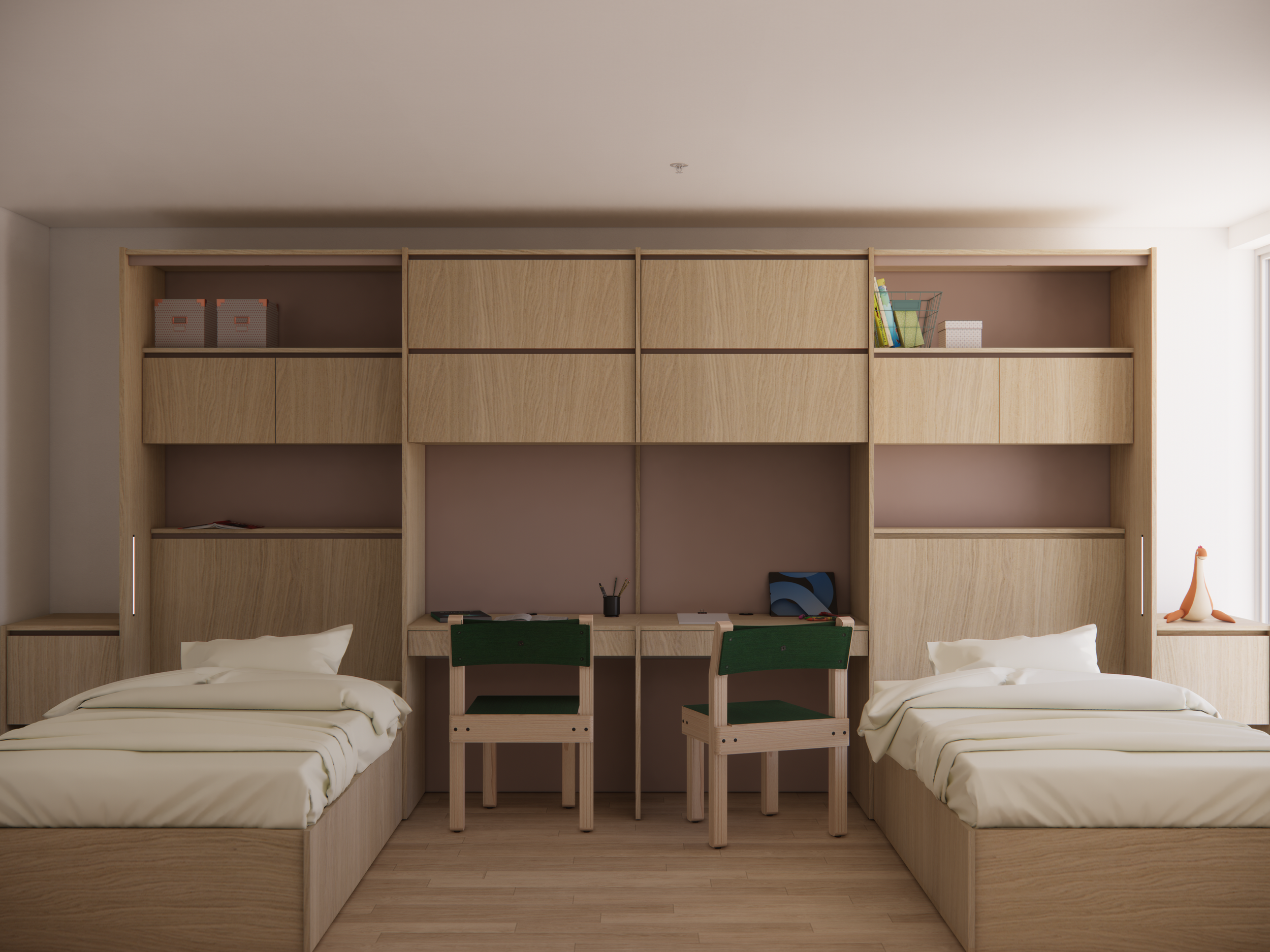
This is much of what Tekka was designed to do - to let a room hold what a household actually owns, to let a single space serve more than one function, to recover the floor area that ill-fitting furniture quietly consumes. Not more space. Better space. The same square footage, finally asked to do its job.
It is, almost always, the more considered answer. And in a city where space costs what it does here, it is very often the wiser one.
Begin a conversation
If your home feels like it has run out of room, it may be worth a conversation before it's worth a move. Visit our showroom at 41 West 7th Avenue in Vancouver, or start a conversation about the space you already have.